Picture the scene: it's the mid-1980s, it's 5pm, and a (very) young me is parked in front of the television. That familiar theme tune kicks in. John Craven appears. And for the next ten minutes, the wider world comes into focus. Wars, weather, wildlife: all filtered through a lens that somehow made sense to a child.
Newsround was appointment viewing in our house. Non-negotiable. And if you'd told that child that one day he'd be helping to shape a Newsround story himself? He'd have thought you were having him on. Yet here we are.
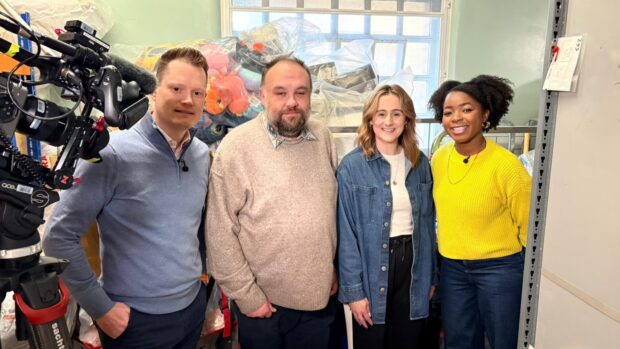
When the opportunity arose this month to work with BBC Newsround on the IPO's 'Fake Toys, Real Harms' campaign, I won't pretend I didn't feel a little flutter of excitement. Some professional moments just hit differently.
Serious journalism for young audiences
For those who might think wrongly that children's TV news programming is a quaint relic, think again. Newsround has serious journalistic pedigree. I can actually remember it breaking the news of the Challenger space shuttle disaster in 1986 – and, several years later, discovering that it was the first UK news outlet to do so. This was in an era before 24-hour rolling news, before smartphones, before social media. A children's programme, breaking one of the biggest news stories of the decade.
That credibility endures. It's valued by many teachers as a classroom aid, and I know many parents still talk about it at the school gate. It addresses ‘grown-up’, sometimes difficult issues sensitively, without patronising the viewer.
And in today's fractured media landscape, where attention is fought for amid endless noise and sometimes questionable sources, trusted outlets that can cut through matter more than ever. Doing so in a way that's genuinely accessible to young audiences? That's a rare and valuable thing.
Which brings me neatly to why this collaboration made such perfect sense.
Planting the seeds of understanding
At the IPO, we have an IP education framework built on a simple but important premise: respect for intellectual property rights flows from understanding. You can't expect people to value something they don't understand. That's why we've invested in developing resources like our new IP Guide for Students - a practical introduction helping young people recognise and protect the value of their ideas, and that teachers could also use to introduce IP to younger audiences in the classroom.
Our ambitious longer-term goal is also to make IP crime and infringement socially unacceptable. Not through enforcement action to intercept the criminals alone, but through genuine comprehension of why IP rights matter, the harms that occur when criminals abuse these, and giving people the information they need to help make informed choices. And to achieve that, it is important we reach people early.
So when the chance arose to take our 'Fake Toys, Real Harms' message to Newsround's audience, supported by our brilliant partners at Swansea Council Trading Standards, it felt like a perfect confluence. Here was an opportunity to talk to children directly about something that affects them – counterfeit toys, with their hidden dangers from banned chemicals to choking hazards – through a medium they trust, in language they’ll understand.
From the front pages into the classroom
This Newsround piece came on the back of a prominent campaign that had already captured a lot of attention, generating thousands of pieces of media coverage as well as engagement on social media. With the support of our partners, we'd reached parents, grandparents, and gift-buyers across the country with a clear message: counterfeit toys aren't just poor quality ‘knock-offs’ – they're genuinely dangerous items that have bypassed every safety check the law requires.
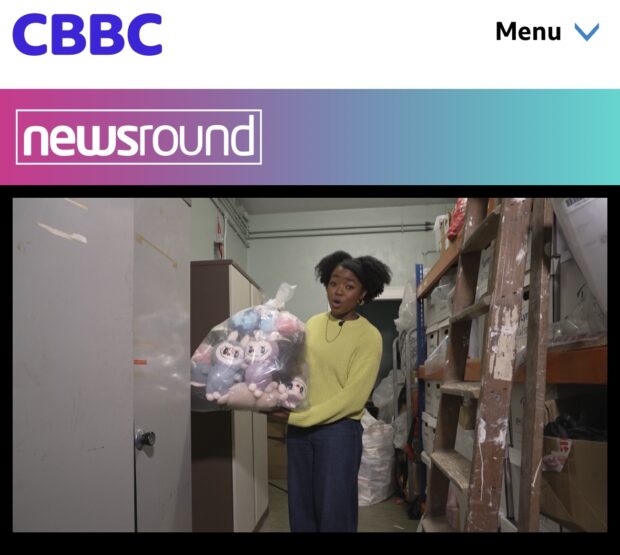
But children themselves? That's an audience that can sometimes be overlooked in campaigns like this. Yet there's solid precedent for reaching them directly. Think of the fire safety campaigns of the 1980s and 90s. Children absorbed and carried home messages about smoke alarms and escape plans, influencing household behaviour in ways that campaigns focused on adults alone might not have achieved. Children aren't passive recipients; they're often active participants in family decision-making.
And naturally, when it comes to toys, they're most likely to be the ones asking for the latest must-have item (the Labubu doll craze being a prime example). Helping them understand why their loved ones might have to say no to a suspiciously cheap version isn't just about this Christmas or the next birthday – it's about building the foundations of informed consumer behaviour for life.
We worked with the Newsround team to help develop a creative concept that would land the message without frightening young viewers. The result was a 'jail' for dangerous counterfeits – a visual device that made the risks tangible and memorable, while keeping the tone appropriate for the audience. It struck the right balance: imaginative enough to capture attention, clear enough to reinforce the message about potential harms.
The IPO's Spokesperson on the day, our Head of Intelligence Partnerships Rhys Hurley, deftly brought the story to life on camera by using actual samples of seized counterfeit toys to demonstrate the dangers. Without lecturing or preaching, Rhys showed the audience exactly what to look out for – a powerful approach that respected their intelligence and invited them to draw their own conclusions.
Full Circle - from viewer to contributor
I won't pretend I wasn't a little thrilled by the whole experience. Working with the highly skilled Newsround production crew was a real pleasure - they were incredibly tuned in to how information resonates with young people, and how to translate complexity into information that their viewers can relate to and act upon. I learned a lot.
And there's something rather wonderful about your professional life intersecting with your childhood memories in this way. Perhaps it's not surprising that someone who grew up captivated by Newsround ended up working in press and media relations.
But more importantly, this was a chance to reach a crucial audience with a message that could genuinely keep them safe. And if, somewhere, there's a child watching who goes on to work in communications or even in IP themselves one day... well, I might be biased, but that would be rather nice too.
Leave a comment