Moti Me is a business built to help children with developmental conditions engage more easily with physiotherapy through play.
A Class I medical device, Moti Me is designed to make physiotherapy more engaging. Using lights, sounds and playful activities, it helps children both with disabilities and in early-years development improve strength, coordination, balance and motor skills.
Industrial designer and founder Katie Michaels has not only developed the product but taken steps to protect what makes it unique, using intellectual property (IP) to support both the innovation and the growth of the business.
We spoke to Katie about how Moti Me came to life, and how IP has supported the product and the business as it’s developed.
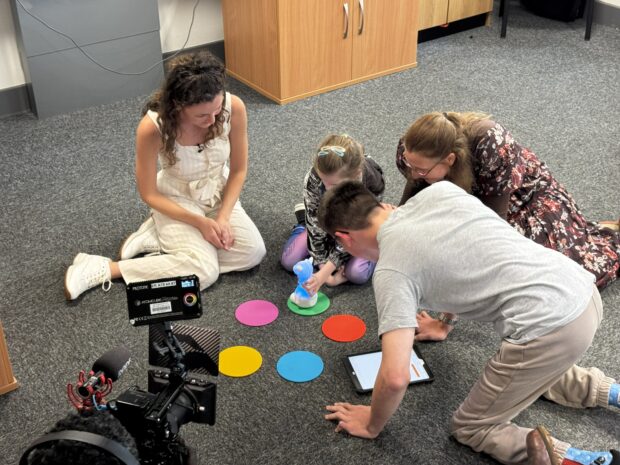
Where the idea began
Moti Me started with a family connection. After graduating from Loughborough University, Katie spent time with her young cousin, who had been diagnosed with cerebral palsy.
Katie explains:
“I saw how much physiotherapy he had to do every single day to achieve milestones like sitting and walking. But for a young child, it’s really hard to stay engaged with those exercises.”
That experience shaped the direction of the business from the start. Katie began exploring how her design background could be used to make physiotherapy more engaging, and quickly realised that many other families were facing the same challenge.
What makes the product unique
One of the things that makes Moti Me distinctive is how closely it has been shaped by the people it is designed for.
Katie has worked with more than 30 organisations, including hospitals, special educational needs schools, physiotherapists and families, to understand different needs and test how the product performs in real-world settings. As Katie puts it:
“we’ve really taken input from children and their families. Because of that, we’ve created something that’s adaptable to lots of different abilities, ages and conditions.”
Although still in development, Moti Me has already shown promising results. A 10-week case study with Alder Hey Children’s Hospital found a positive impact on a child’s hamstring flexibility.
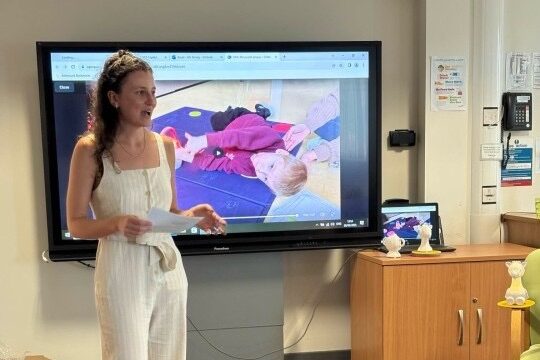
This level of input is a big part of what gives the product its value. It’s not just how it works, but how it has been shaped over time, which makes it important to protect what sets it apart through intellectual property.
Understanding what was worth protecting
Katie was aware of IP early in her design journey through the Loughborough University incubator, alongside guidance from mentors. As she explains,
“IP was something that came up often. I knew it was important, but it was about understanding what we could protect and how to do it.”
As the product developed, so did the need to make clearer decisions about protection. Like many early-stage businesses, knowing what to prioritise and how to fund it were key challenges.
Support from the IPO, including an IP Audit delivered through its delivery partner, Innovate UK, helped Katie take a more structured approach. The audit provided a professional review of Moti Me’s IP, helping her better understand what the business held and where protection would be most valuable. Reflecting on this, Katie says, “I thought I knew what we wanted to protect, but the audit helped us take a step back and look at it more widely.”
This gave Katie a clearer view of what really mattered and helped her move forward with more confidence.
Protecting different types of value
With that clearer understanding, Katie took steps to protect different aspects of Moti Me.
She applied for patents covering how parts of the product work, and secured design rights to protect its appearance, including its character-based design. Trade mark protection is also important. People don’t just buy from a business, they buy from a name they trust, so protecting the Moti Me brand name and logo helps make sure the business is recognisable as it grows.
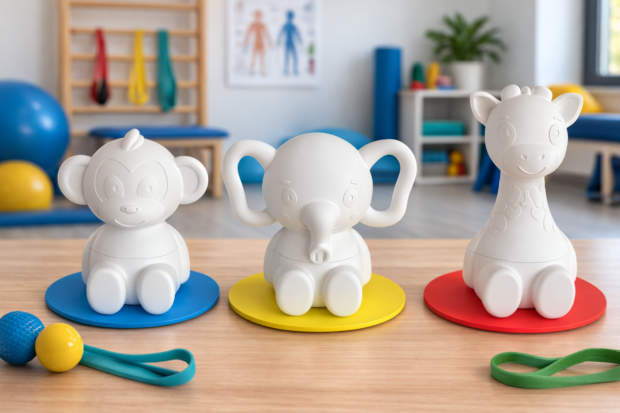
Katie also received support through the IPO’s pilot funding scheme, IP Access, which provided funding to help businesses cover the costs of obtaining IP protection. The IP Access fund is no longer available, but as she puts it:
“that funding covered most of the costs involved. It made a huge difference.”
Looking ahead
Moti Me is continuing to refine its product, with plans to expand its patent protection internationally.
Alongside this, Katie is building a community around the brand, sharing content that promotes awareness, inclusion and support for families. As Katie says, “it’s about more than just the product. We want to promote equality and create something that genuinely helps people.”
You can follow this community on her Instagram page, and learn more about Moti Me on their website.
Like Katie, you may already have something worth protecting. Getting the right advice can help you take the next step.
Find out how to get advice and support for your business: Get intellectual property rights: step-by-step - GOV.UK
2 comments
Comment by Bandele Jacqueline Mbu Tchicaya posted on
Thank you very much for the opportunity of learning.
Comment by Bandele Jacqueline Mbu Tchicaya posted on
Thank you very much