Walking into the ice hockey arena at the 2026 Winter Olympics in Milano Cortina, it was immediately clear why people talk about the Olympic atmosphere. An excited crowd surged around me, flags rippled within arm’s reach and the puck flew across the ice with speed, followed by teams of impressive athletes. The roar, the colour, the speed all of it was electric, and I was completely swept up in the sport - long before I started noticing the strategy behind the distinctive identities of the Olympic and Paralympic products and merchandise. Somewhere between the cheers and the cold air, the IP behind the spectacle started to stand out.
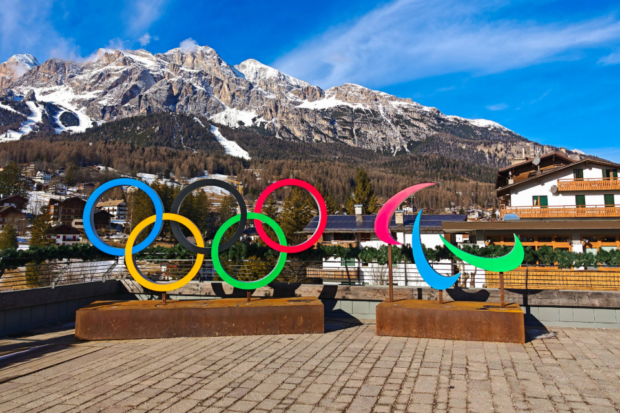
The excitement continued even after I stepped out of the arena. The fan zone was alive with screens, merch stalls and branded giveaways, streets lined with iconic Olympic symbols and the logo designed for each games edition stamped on everything in sight. Fans from across the world wore official Milano Cortina and home country kit alongside Olympic and Paralympic partnership merchandise, like Coca Cola beanies, HBO Max snoods and FIAT lanyards. The sheer scale of it catches you off guard, and once it does, the trade mark and licensing operation powering it all is staggering.
Gold standard licensing
It turns out that the commercial might behind the Games is every bit as impressive as the sports. There are licensing programmes that operate for each edition of the Games, where each Organising Committee runs its own structured programme covering official merchandise, retail operations and supplier licensing. Additionally, both the International Olympic and Paralympic Committees (IOC and IPC) have developed licensing programmes to strengthen and promote their respective brands not just during the Games, but in the years between them too.
At the heart of many of these efforts are the official mascots. Present at every edition of the Olympic and Paralympic Games, they are designed from the outset with licensing in mind. A mascot needs to be distinctive enough to trade mark, appealing enough to sell, and flexible enough to appear across hundreds of different products. At Milano Cortina, the mascots were Tina and Milo, a pair of stoats. Tina, protected by IT502024000020527, represented the Olympics, while her younger brother Milo, protected by IT502024000020530, was the face of the Paralympics.
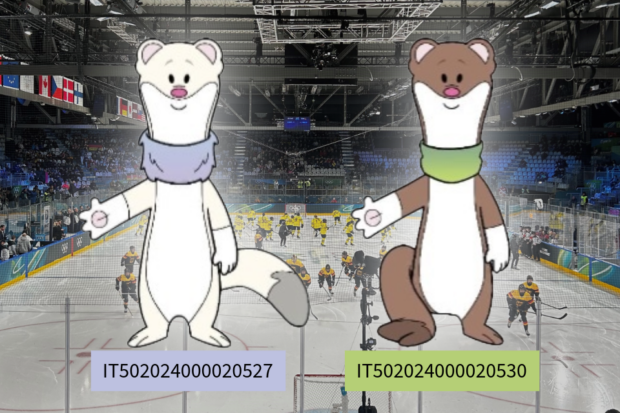
Because the mascots are unique to each edition of the Games and protected as a trade mark across a wide range of classes, manufacturers can apply for a licence to put Tina and Milo on soft toys, clothing, keyrings and more. Those licences generate revenue, extend the brand's reach, and keep quality control firmly in place. Licensees are required to meet high standards, and the IOC and IPC run active anti-counterfeiting programmes combining trade mark enforcement, consumer education and monitoring to protect both consumers and the legitimate businesses that have paid for the right to use the brand. Beyond mascots, licensing also covers official apparel, collectible badge pins and host city merchandise, all produced under strict quality and brand use rules.
The symbols that hold it all together
The Olympic rings and the Paralympic Agitos (the colourful crescents representing the Paralympic values of courage, determination, inspiration, and equality) are among the most recognised symbols on the planet and protecting them is taken very seriously. The IOC and IPC hold trade mark registrations across the world, including through the WIPO Madrid System for the international registration of marks.
Few brands carry the same cultural weight as the rings and Agitos, which is why their legal protection is unusually far-reaching. In the UK they're safeguarded under the Olympic Symbol etc. (Protection) Act 1995. Separate legislation introduced ahead of London 2012 extended comparable protection to Paralympic properties through the creation of a dedicated Paralympics association right. This means that the IPO can refuse registration of marks that feature the protected symbols, unless from the official committees.
In the UK, the rings themselves are protected as a trade mark (UK00801026242), as well as the Paralympic Agitos (UK00903481074) and the words "Olympic" and "Paralympic" each carry their own registrations (UK00000339996 and UK00911910627). The rings must always appear in an approved form, a rule tightly enforced globally. Other notable parts of the IOC and IPC’s trade mark portfolio include the official logo for each Games edition, such as that for Milano Cortina Olympics WO0000001654786 and Paralympics WO0000001650446.
Partner power
While much of what fans see comes from licensed merchandise and official Games branding, partnerships form a huge part of the Olympic commercial ecosystem too. Licensing controls physical goods; partnerships control brand association in campaigns and on-the-ground experiences
Global sponsors don’t simply place their logos on banners; they enter long-term agreements that give them tightly controlled rights to activate the Olympic brand across advertising, on-the-ground experiences and promotional campaigns.
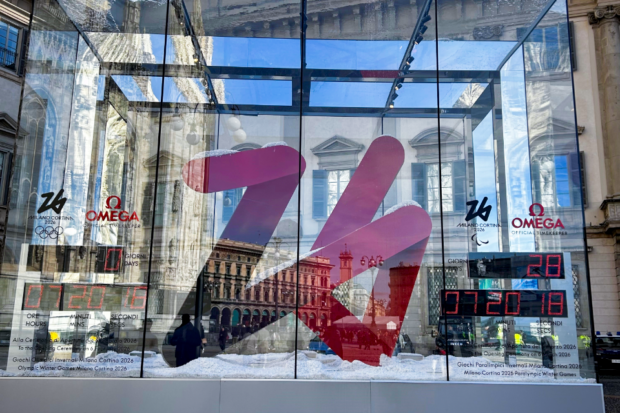
Those rights are governed by detailed brand guidelines and IP rules set by the IOC and IPC, ensuring that sponsor logos, cobranding and campaign assets use Olympic properties consistently and correctly. It’s why brands like CocaCola, Airbnb or Omega appear so prominently across host city experiences. Each has purchased the right to associate with some of the most valuable trade marks in the world. Partnerships and licensing sit side by side: one drives global visibility, and the other regulates how official products and imagery reach consumers. Together, they form the commercial machinery that keeps the Games running.
What the Olympic approach can teach any brand
As I reflected on my first time at an Olympic games, I was struck by how much invisible infrastructure held it all together. And the same principles that protect the Olympic rings and Paralympic Agitos apply to any organisation with a valuable brand, however large or small.
A registered trade mark gives you the legal standing to act against infringers and counterfeiters, and to license your brand to others while keeping control over how it's used and the quality it represents. Without registration, those rights are much harder to enforce. A trade mark lasts ten years and can be renewed indefinitely, so the investment made now can protect a brand for as long as it remains valuable.
Licensing, done well, allows a brand to generate revenue and reach new audiences without losing what makes it distinctive. The key, whether you're the IOC, the IPC, or a small business with a brilliant idea, is that the licensor retains oversight through the terms of the licence agreement.
If you want to understand how trade mark registration and licensing could work for you, our guidance on registering a trade mark is a great place to start. If this torch-lit journey through intellectual property has caught your interest, subscribe to our blog for more insights into how IP shapes the world around us.
Recent Comments